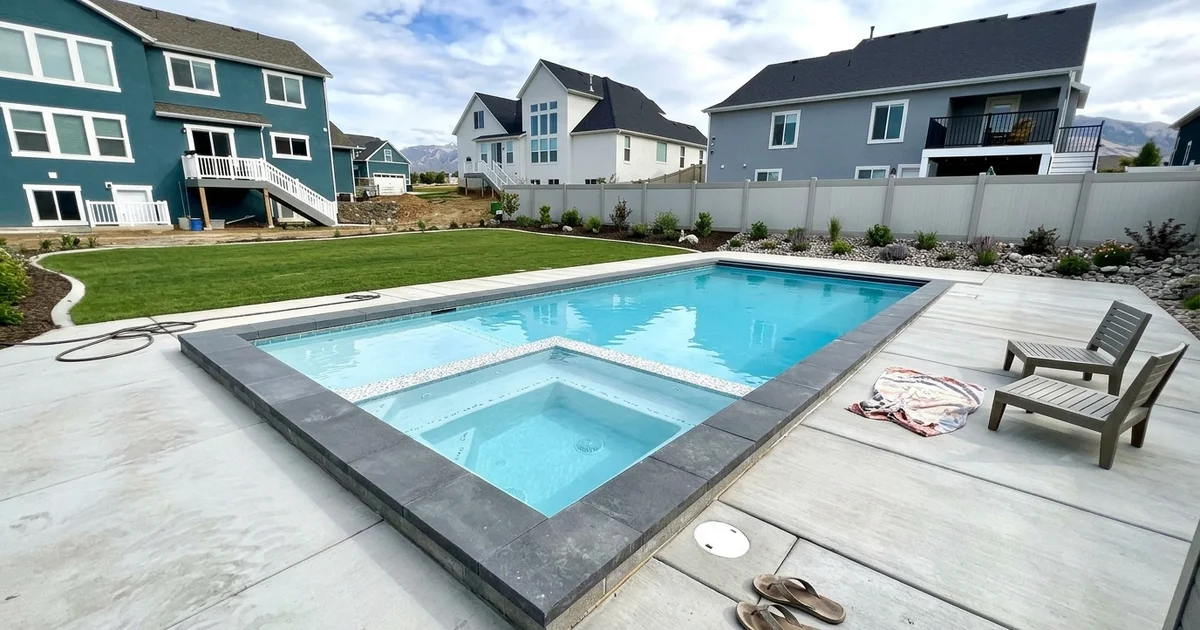
What a custom pool actually costs in Utah
You already know that building an outdoor living space is a major investment, but understanding what a pool really costs in Utah means knowing the difference between a headline number and a genuinely finished project. In 2026, smaller and simpler custom pools may start around $85,000, many projects land somewhere around $100,000 or more, and complete backyard builds with a spa, decking, drainage, and landscaping commonly reach $130,000–$180,000+. Large, complex, or highly customized projects can exceed $200,000.
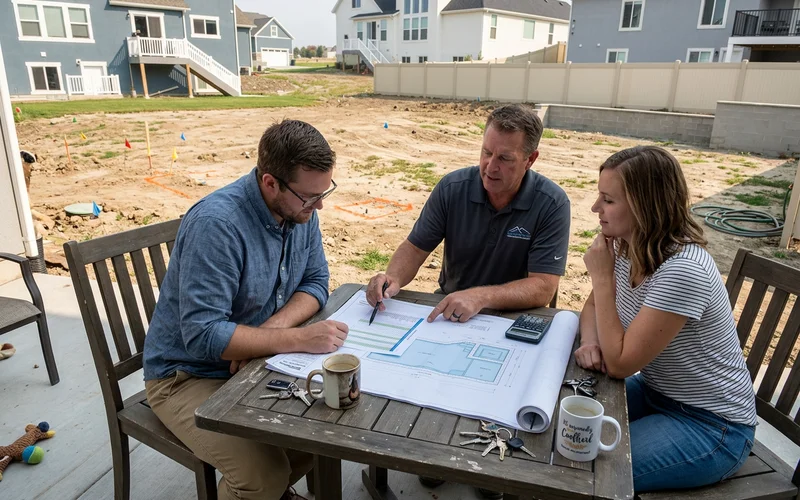
These are planning ranges, not guaranteed prices. Site access, slope, excavation, soil, pool size, features, decking, drainage, and landscaping all determine the final cost, and every one of them varies from property to property.
Lower advertised starting prices often reflect a more limited scope. They may exclude items that are part of a finished project, such as:
- Retaining walls for Wasatch Front slopes
- Dirt haul-off and full excavation
- Drainage, grading, and landscaping restoration
- Automation and upgraded equipment packages
Almost nobody actually wants to be left with water surrounded by dirt.
A custom gunite pool is designed for a specific property, which means a generic menu price simply does not work. A realistic range comes before investing weeks in the design phase.
The number to plan around
If you are budgeting for a custom pool in Utah, plan on six figures. Smaller and simpler builds can come in around $85,000, many projects land near $100,000 or above, and complete backyard builds with a spa, full decking, drainage, and landscaping commonly reach $130,000–$180,000+. Anything advertised well below that range is usually a scope question, not a bargain.
What actually drives the range
The cost to build a pool in utah fluctuates based on site conditions, finish materials, and equipment choices. Two pools with the exact same surface area can differ by tens of thousands of dollars depending on the lot.
Slope, soil, and backyard access move the number the most along the Wasatch Front. An ordinary excavation quickly turns into an expensive project if you need engineered retaining walls and a fleet of trucks to haul away rocky clay soil.
| Cost driver | Why it matters here | Impact |
|---|---|---|
| Slope and retaining | Wasatch Front bench lots often need engineered walls and deeper cuts | High |
| Excavation and haul-off | Rock, clay, and limited on-site spoil space mean trucking material away | High |
| Backyard access | Narrow side yards force smaller equipment and more passes | Medium to high |
| Attached spa | Adds structure, plumbing, heating capacity, and automation | High |
| Decking and coping | Frequently the largest line item after the shell | High |
| Automatic cover | Meaningful cost, meaningful return in heat and evaporation savings | Medium |
| Equipment and automation | Pump, filter, heater, sanitization, lighting, controls | Medium |
| Drainage and grading | Required once you replace lawn with concrete and water | Medium |
| Interior finish | Plaster, quartz, and pebble finishes sit at different price points | Medium |
| Landscaping restoration | The difference between a finished yard and a dirt ring | Medium to high |
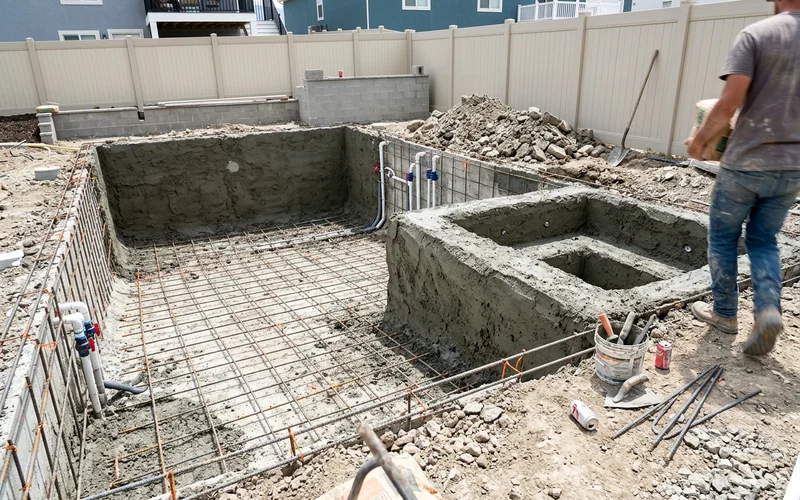
Notice how many of those line items are site conditions rather than simple design choices. This is exactly why a quote given over the phone is rarely accurate.
A physical site visit is required before locking in any numbers. Access routes and soil composition have to be evaluated firsthand.
Upgrades That Change Your Final Price
The finish materials and equipment package you select will dramatically shift your budget. A standard white plaster finish is the most budget-friendly option at roughly $5,500.
Upgrading to a premium aggregate like PebbleTec adds an extra $5,000 to $10,000 to the total, but it easily lasts 15 to 20 years. Pricing these specific upgrades out during your planning stage is worth doing:
- Variable-speed pumps: Units like the Pentair IntelliFlo3 operate much quieter and save significantly on monthly energy bills.
- Top-track cover systems: A standard automatic cover typically costs around $10,000 to $15,000.
- Under-track cover systems: Hidden covers built cleanly into custom shapes run between $15,000 and $22,000.
These cover systems provide excellent heat retention and safety, but they require a serious upfront investment. The trade-offs are usually factored into the initial design meeting.
Why a complete backyard costs more, and why it is worth it
A finished backyard project costs more upfront because it treats the swimming pool as just one component of an integrated outdoor system. The final custom pool price utah residents pay reflects grading, custom hardscaping, and restored irrigation.
The most useful question to answer early is simple: are you buying a pool, or are you buying a finished backyard?
A pool alone is just a gunite shell, plumbing, basic equipment, and a small concrete walkway. That standalone project is cheaper on paper, but it leaves you with a massive to-do list:
- Fixing the ruined lawn and planting new grass
- Managing complex drainage around the new concrete
- Hiring different hardscape contractors the following season
Piecing these elements together later usually costs more than doing it right the first time. The necessary surrounding work is most affordable when finished concurrently, because leaving a project half-done tends to lead to long-term property damage.
A complete project synchronizes every trade into a single schedule.
- Integrated Grading and Drainage: Outlets and slopes are designed specifically for the new hardscape to prevent flooding.
- Custom Decking: Concrete or pavers are sized for how your family actually entertains, not just a minimum perimeter.
- Irrigation Modification: Sprinkler lines are intelligently rerouted rather than just cut and abandoned.
- Final Planting: Landscaping goes in alongside the construction, ending with a beautiful yard rather than a messy punch list.
That comprehensive approach is exactly why an integrated project costs more than a basic shell-only estimate. The two are not a fair comparison.
This distinction is exactly what a complete Utah pool quote should spell out line by line.
Getting a real number for your property
The only way to get a truly accurate figure for your specific lot is to schedule an on-site visit. Grade variations, rocky soil types, utility locations, and drainage outlets all have to be evaluated in person.
Three primary factors are checked during every initial visit:
- The slope and potential need for engineered retaining walls.
- The soil composition to anticipate excavation hauling costs.
- The property access width for construction equipment.
A solid quote aligns the design and the budget together from day one. If your vision and your budget do not line up, it is worth showing which choices move the cost the most so the call about what stays is yours.
When you are ready for a real custom pool price utah quote on your specific property, request a consultation and tell us your city.
Provide the rough scope you have in mind and the financial range you are working with. A straightforward answer will follow on whether the plan fits the current market reality.